
Aug 7, 2026Buying Guides
How Much Do Custom Kitchen Cabinets Cost?
You eagerly start planning your dream kitchen with a set budget in mind. Then, the quote for custom cabinets arrives: the price far exceeds your expectations, even doubling. Shock and confusion foll
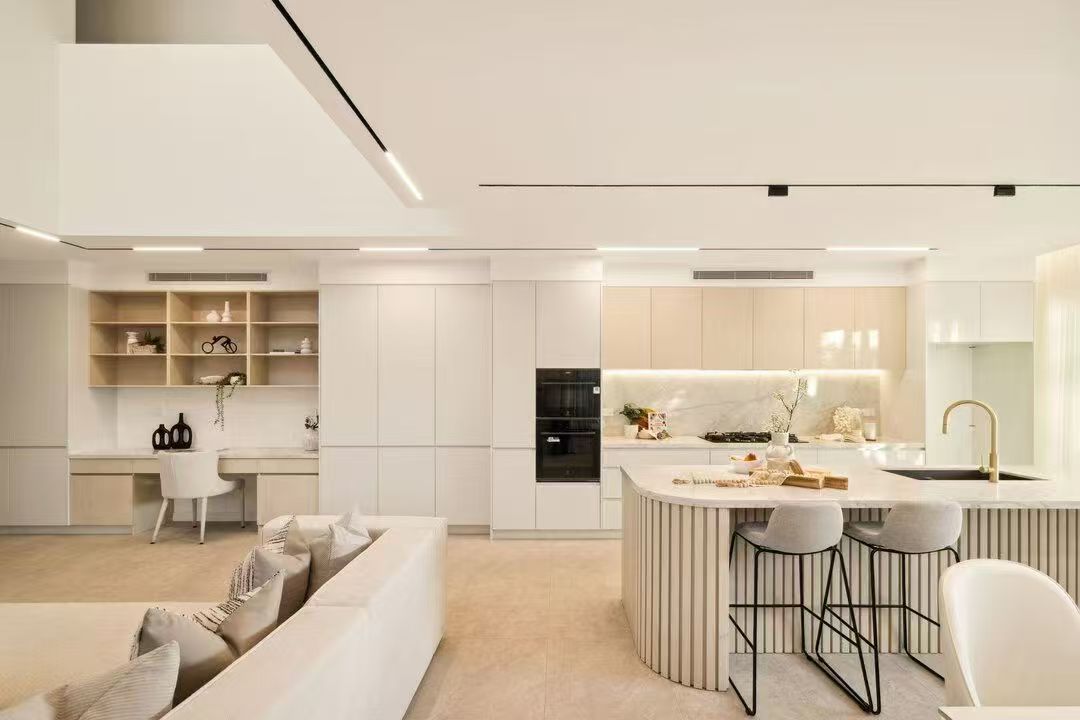
You eagerly start planning your dream kitchen with a set budget in mind.
Then, the quote for custom cabinets arrives: the price far exceeds your expectations, even doubling. Shock and confusion follow”Where is all this money going?”
If you have this question, you are not alone. The “custom kitchen cabinets cost” often feels like a black box, and the vague “average costs” found online don’t help. Because custom work doesn’t have a fixed “price”, it only has a “value composition”.
This article will be your decision-making handbook for 2025. We’ll take you inside the cost black box, breaking down every factor that drives the price—materials, craftsmanship, design complexity, and market trends. By the end of this article, you’ll be able to estimate your budget like an expert, interpret quotes with confidence, make informed trade-offs, and take full control of the entire process from signing to installation, ensuring that your investment delivers the best returns.
Let’s get started: To help you immediately grasp the key points, here are the core 2025 market data and a quick self-check guide we’ve distilled for you:
Core Price Range:
For a standard kitchen (approximately 20–30 linear feet of cabinetry), the total cost of custom kitchen cabinets in 2025 typically ranges from USD 15,000 to 60,000+.
Four Key Factors That Determine Price:
Size and Layout: The linear footage is the foundation, and the size of the kitchen directly affects the cost.
Material Selection: There is a significant difference between budget boards and imported hardwood.
Craftsmanship Complexity: Design complexity (such as carved doors, inset designs) directly influences the price.
Hardware and Accessories: Hidden costs typically account for 15–25% of the total budget.
Quick Self-Estimate Formula:
Budget ≈ (Linear Feet × Price per Foot) + Design Add-ons
Budget Range:
Economy: USD 500–700 per linear foot
Mid-Range: USD 700–1,000 per linear foot
High-End: USD 1,000–1,500+ per linear foot
Why Is There Such a Price Range?
The essence of “custom” is to meet your unique needs, from personalized designs to high-end material choices, each part of your custom kitchen cabinets influences the final price. Next, you’ll learn how to accurately estimate the cost of each project and understand the true value of every dollar spent.
How Does the Cost of Custom Kitchen Cabinets Compare to Stock and Semi-Custom?
Once you have a clear understanding of what “custom” means and have a quick reference for pricing, the next natural question is: “How much more do I need to pay for the ‘custom cabinet’ value, and is the premium worth it?”
To answer this question, we must put “full custom” in context and compare it head-to-head with its two counterparts—stock cabinets and semi-custom cabinets. Let’s break down the key differences and examine the costs.
how much are custom kitchen cabinets
What Are Stock Cabinets?
Stock cabinets are pre-manufactured and available in standard sizes, styles, and finishes. They are mass-produced, which makes them much more affordable compared to custom options. Stock cabinets are ideal for those with a limited budget or time constraints, but they offer minimal flexibility in terms of design and size. Stock cabinets usually cost USD 50–300 per linear foot, depending on the material and style.
What Are Semi-Custom Cabinets?
Semi-custom cabinets strike a balance between stock and fully custom cabinets. While they are still mass-produced, they offer more flexibility in terms of size, design, and finish. This makes them a great option for homeowners who want more personalized features without the higher price of custom kitchen cabinetry.
What Are Custom Cabinets?
Custom cabinets are made to fit your exact specifications, offering unlimited design possibilities. Everything from the size, material, and finish to the layout and internal features is personalized to suit your needs. Custom cabinets are the most expensive option but provide the highest level of quality and design flexibility.
Cost Comparison Chart: Custom vs Semi-Custom vs Stock Cabinets
FeatureStock CabinetsSemi-Custom CabinetsCustom Cabinets
Price per Linear FootUSD 50–300USD 150–650USD 500–1,500+
CustomizationVery LimitedModerateFull Customization
Material OptionsLimited to stock materialsMore choices availableUnlimited choices
Design FlexibilityNoneSome flexibilityTotal flexibility
Lead Time1-4 weeks4-8 weeks6-12 weeks
Ideal forBudget-conscious projectsThose needing some flexibilityHigh-end, personalized projects
Why Are Custom Kitchen Cabinets More Expensive, Yet Offer Better Long-Term ROI?
This table clearly shows the price tiers, but the higher custom kicthen cabinets price isn’t just a “brand premium.” You’re paying for the following core values, which directly translate into long-term returns:
Zero-Compromise Space Solutions
Custom cabinets fit perfectly into every wall, wrap around every pipe, and utilize every awkward corner. This isn’t just about aesthetics—it adds usable storage space, which is invaluable for smaller homes or uniquely shaped kitchens. The value of this is immeasurable.
Unmatched Durability and Maintenance
With superior materials (thicker panels, solid wood frames), more refined craftsmanship (dovetail joints, fine sanding), and top-tier hardware, custom cabinets typically outlast standard options. They’re less prone to warping, fading, or damage, meaning lower long-term maintenance costs.
Personalization for Enhanced Joy and Efficiency
A kitchen tailored to your height, cooking habits, and storage preferences significantly improves daily convenience and enjoyment. This “made-to-order” experience is something stock cabinets cannot offer.
Increased Property Value
A well-designed, expertly crafted, and durable custom kitchen is a hallmark of high-end and quality homes. In property evaluations or when selling in the future, it will significantly differentiate your home from those with standard kitchens, adding substantial value.
Customized cabinets has many advantages. You’re not just paying for “cabinets”; you’re investing in “space optimization solutions,” “long-lasting assets,” and a “personalized living experience.”
When Choosing Semi-Custom or High-End RTA Cabinets?
While full custom is ideal for many, it’s not always necessary. In the following situations, considering semi-custom or high-quality RTA (Ready-to-Assemble) cabinets could be a more pragmatic choice:
Strict Budget and Organized Space
If your kitchen is a standard rectangular shape with no tricky beams, pipes, or other obstacles, the sizing flexibility offered by semi-custom cabinets is likely enough to create a neat, beautiful look. This allows you to allocate more of your budget to countertops or appliances.
Investment Property or Medium-Term Holding
For rental properties or homes you plan to sell within 5-10 years, a high custom investment might not provide a full return. Opting for mid-range semi-custom or well-known RTA brands strikes the best balance between quality, aesthetics, and cost control.
Extremely Tight Timeline
The lengthy lead time for custom cabinets may not fit your move-in or kicthen renovation schedule. Choosing semi-custom or RTA cabinets with stocked modules or immediate availability can significantly reduce project timelines.
DIY Enthusiast
Some high-end RTA brands offer excellent panel quality, hardware, and design. If you’re handy, installing these cabinets yourself can save a lot on labor costs and still give you a near-custom result.
Ask Yourself Two Questions
⬛
Does my home layout or functional need have a pain point that only custom can solve? (e.g., unique shapes, extreme storage requirements)
⬛
What’s my “expected lifespan” and “emotional budget” for the kitchen?
Now that you have a macro understanding of whether “custom” is right for you, let’s move to the most practical part: how to accurately estimate the cost of custom cabinets for your specific space, without relying on guesswork.
How to Quickly Estimate the Cost of Custom Kitchen Cabinets for Your Space?
Now that you’ve understood the key factors that drive the cost of custom kitchen cabinets, it’s time to start thinking about your specific kitchen and how to estimate its cost. Establishing a highly credible budget range for kitchen cabinets gives you absolute control when you begin contacting cabinet suppliers.
how-to-measure-kitchen-cabinets
Step 1: Measure Your Kitchen's "Linear Feet"
The first thing you need to do is measure the linear footage of your kitchen. Linear feet refer to the length of the cabinets along the walls. This is the most basic measurement and forms the foundation of your budget estimate.
How to Measure?
Tools you’ll need: A measuring tape, paper and pen, or a smartphone notes app.
Measuring Base Cabinets: Measure the total length of the walls where you plan to install base cabinets. Skip sections where built-in appliances (like the fridge, oven, dishwasher) will be located, as well as door openings.
Measuring Wall Cabinets: Similarly, measure the total length of the walls where you plan to install wall cabinets.
Core Formula:
Total Linear Feet = Base Cabinet Length + Wall Cabinet Length
Example:
For a typical L-shaped kitchen, if the total length of the base cabinets is 12 feet and the total length of the wall cabinets is 8 feet, your total linear feet would be approximately 20 feet.
Important Tip
⬛
This method is for a quick estimate. Professional full-custom designs might use a more precise "unit pricing method," but linear feet is the standard and widely used communication tool in the market for quick estimates.
Step 2: Identify Your Kitchen Layout
The layout of your kitchen plays a significant role in determining the final cost. There are a few common kitchen layouts, and knowing which one best describes your kitchen will help you understand the price range.
Small Galley Kitchen: A narrow kitchen layout with cabinets on two parallel walls. This is usually the most affordable layout.
L-Shaped or U-Shaped Kitchen: These are more spacious and have cabinets on two or three walls, and often include an island. These layouts are more expensive than a small galley but still within reach for many budgets.
Large Open Kitchen with an Island: Large kitchens with open layouts and multiple islands or work zones. These are the most expensive due to the increased linear footage, as well as the need for more intricate design elements.
Step 3: Apply the “Good, Better, Best” Pricing Framework
Now, to help you make an informed decision, here’s a simplified breakdown based on U.S. market prices for custom kitchen cabinets in 2025 (linear foot pricing for cabinetry, excluding countertops, appliances, and fixtures).
TierPrice Range (USD / LF)Estimated Total for 20 LF KitchenWhat You’re Paying For
Good / Budget-friendlyUSD 500 – 700USD 10,000 – 14,000Basic functionality: Simple designs, MDF / Medium Density Fiberboard, basic hardware
Better / Mid-RangeUSD 700 – 1,100USD 14,000 – 22,000Upgraded materials (plywood / veneer), better finishes, some flexibility in design
Best / High-End CustomUSD 1,200 – 1,800+USD 24,000 – 36,000Premium options: Solid wood, detailed craftsmanship, high-quality hardware, full customization
Step 4: Factor in Add-Ons and Special Features
As you refine your budget, consider the add-ons or special features you may want to include in your custom kitchen cabinets. These additions will raise your overall cost but can provide significant benefits in terms of function and style.
High Cabinets or Extended Heights: Adding cabinets that go all the way to the ceiling can add 10-15% to your overall cost.
Kitchen Islands: If your kitchen layout includes an island, you can expect to pay an additional USD 3,000–10,000, depending on the size and complexity.
Pull-Out Features: Spice racks, pull-out trash bins, drawer organizers, or specialized compartments for pots and pans can each add USD 100–500 per unit.
What Design Choices Will Drive Up the Cost of Custom Kitchen Cabinets?
After mastering the basic estimation method, you likely have a rough budget in hand. Now, it’s time to dig deeper and examine the design factors that cause fluctuations in that number. In custom cabinetry, aesthetics are closely linked to cost, and every detail that excites you comes with a clear craftsmanship and price tag behind it.
By understanding this, you can transition from passively receiving quotes to actively planning and controlling your budget as a design leader.
how much does modern black kitchen cabinet dost
Layout Complexity
Base cabinets are standard, but the walls in your kitchen are rarely perfect. Any deviation from a straight, 90-degree angle layout means additional engineering solutions.
Corner Solutions: Such as Lazy Susans, pull‑out corner units or angled cabinetry to accommodate unusual walls — typically raise the per‑linear‑foot cost, or add the equivalent cost of 1–2 additional linear feet. The exact surcharge depends heavily on material, hardware, and installation difficulty.”
Non-Standard Angles and Irregular Spaces: Wrapping cabinetry around sloped walls, columns, or adapting to non-90-degree corners requires custom fabrication, and this uniqueness significantly increases costs.
Double Islands or Long Continuous Cabinets: This not only adds material cost, but it also requires higher structural stability, countertop support, and precise installation, which drives up the overall price.
Door Styles of Kitchen Cabinets
The doors of your cabinets are the “face” of your kitchen, and their design dictates the amount of manual or machine processing time.
Cost Gradient of Door Styles:
Door TypeCraft DescriptionRelative Cost Index (Flat Panel Door = 1.0)Cost Drivers
Flat Panel DoorsSurface finished with veneer/paint, no shaping.1.0 (Base)Simplest craftsmanship, highly automated, quickest to produce.
Standard Milled Doors (e.g., Shaker)Simple step or linear decoration around the door panel.1.3 – 1.8Requires extra milling processes and more complex assembly.
Complex Milled/Carved DoorsFeatures raised carvings, intricate lines or modern geometric cutouts.2.0 – 4.0+Relies on high-end CNC machines or hand carving, with increased labor and material waste.
Solid Wood Framed DoorsTraditional dovetail or modern hidden frame construction, common in high-end styles.2.5 – 5.0+High-quality wood required, all manual or semi-manual assembly, time-consuming and requires expert skills.
Glass Doors (Frame + Glass)Incorporates glass inserts in any frame type.1.5 – 3.0 (adds to base door type)Adds cost for glass, glass slot processing, and organizing the interior space.
Surface Finishing of Kitchen Cabinets
Painting or staining is not just about color; it’s a layer of “skin.” The cost variation of cabinet mainly stems from the number of steps in the process and the level of manual intervention involved.
Standard Melamine Finish / Basic Laminate: Pre-fabricated in the factory, lowest cost, variety of options.
Standard Spray Paint (Single Color Gloss/Matte): Requires primer, topcoat, and sanding, but the process is standardized.
Multi-Step Antiquing: This is where costs spike. To achieve an aged effect, steps may include: base color → sanding → top color → dry brushing → glazing → protective lacquer. Every step means more materials, labor, and drying time.
Special Effects: Metallic paint, piano gloss finishes (requires dust-free workshops and multiple sanding), and artistic hand-painted designs. These enter the realm of “decorative art,” where prices have no upper limit.
Special Features and Integration
Modern custom cabinets go far beyond just storage, becoming centers of home intelligence and integration.
Appliance Integration: Hiding refrigerators, dishwashers, and ovens behind custom cabinet panels requires reinforcing cabinetry, custom ventilation, precise hinges, and door panel balancing technology. Each integrated panel can add 50%-100% more than a standard door.
Lighting Systems: Cabinet lighting, shelf lighting, kickplate lights, and ambient light strips require paying for low-voltage LED components, transformers, wiring design, grooving, and control systems.
Smart Accessories: Electric lift-up wall cabinets, touch-to-open doors, and smart storage systems are “luxury” hardware items that come with a high price tag, plus requirements for power support and installation precision.
How Do Materials and Hardware Fundamentally Determine the Price and Longevity of Custom Kitchen Cabinets?
While design sketches outline the dream, materials and hardware define its structure, texture, and the feel of every opening and closing. These are the material foundations that transform design plans into physical products, and they represent the areas of your budget that are most variable and deserving of careful thought. A change in choice can result in several-fold differences in both price and durability.
Cabinet Body Materials
The cabinet body is the “support structure” of your kitchen. Although it is often hidden, it plays a key role in determining the overall lifespan.
Materials-of-Kitchen-Cabinets-custom kitchen cabinets cost
Cabinet Body Materials & Performance Comparison
Material TypeCost Index (Flat Particleboard = 1.0)Core Features & Suitable Scenarios
Particleboard (Chipboard)1.0 (Base)Budget Option: The lowest custom kicthen cabinets cost with moderate moisture resistance. Must opt for E0 or higher environmental standard products. Suitable for dry environments and budget-conscious projects.
MDF (Medium Density Fiberboard)1.2 – 1.5Flatness Champion: Extremely smooth surface, ideal for lacquered and veneered doors. Better moisture resistance than basic particleboard, but it can swell when exposed to water.
Plywood (Multi-layer Wood Board)1.8 – 3.0Balance of Strength and Moisture Resistance: Made of layers of wood glued together, it is stable, less likely to warp, and resistant to moisture. A popular choice for mid-to-high-end custom cabinetry.
Eco-board / Fine Wood Veneer Board1.5 – 2.5“Eco-Friendly” Perception: Made from solid wood strips with veneer on both sides. Strength depends on the core material, so choose carefully based on brand and internal quality.
Solid Wood4.0+Premium Choice: Typically used for high-end frames or specific styles. Expensive, sensitive to temperature and humidity, requires fine care, but its texture and feel are unmatched.
Core Tip
⬛
In humid areas (such as kitchens and bathrooms), it’s wise to use multi-layer plywood or moisture-resistant core materials, especially in key areas like the sink cabinet, to avoid future issues.
Door Materials and Panels
This is the “face” of your cabinets, determining 90% of the first impression and style.
Double-Sided Laminate / Melamine:
Cost: Best value. Available in a variety of colors and patterns, durable, scratch-resistant, and easy to clean. Suitable for modern minimalist styles.
PET / Acrylic High-Gloss Panels:
Cost: Modern appeal. Bright colors, mirror-like surface, very easy to clean but prone to fingerprints and scratches.
Wood Veneer (Wood Veneering):
Cost: Higher than basic laminate. Offers a real wood texture and smooth touch, can be shaped into intricate designs.
Key Consideration: Requires high-quality edging craftsmanship.
Lacquer:
Cost: Color and craftsmanship. Achieves any color and a luxurious finish. There are standard lacquer and piano lacquer options (the latter requires multiple sanding processes, making it more expensive).
Durability: Slightly lower scratch resistance compared to other materials.
Solid Wood:
Cost: Traditional and luxurious. Unique grain patterns, can be intricately carved.
Risk: Prone to cracking and warping, and the price is the highest, requiring high maintenance.
Selection Philosophy
⬛
Don’t be overly fixated on "all-solid wood." For modern kitchens, a combination of high-quality board materials (like eco-friendly plywood) with quality wood veneers or lacquered finishes often offers the best balance of stability, beauty, and cost.
Hardwares of Kitchen Cabinets
While the cabinet body provides structure, hardware determines functionality and long-term durability. High-quality hardware, such as soft-close hinges and smooth drawer slides, enhances the user experience and extends the lifespan of your cabinets.
Hinges: Basic hinges may be inexpensive, but upgrading to soft-close hinges, like Blum or Hettich, adds both comfort and longevity.
Drawer Slides: Standard slides are functional, but under-mount, soft-close slides offer smoother operation and greater weight capacity.
How to Save Money on Customizing Kitchen Cabinets?
Customizing your kitchen cabinets doesn’t have to break the bank. By making strategic choices and focusing on the essentials, you can get a high-quality, functional kitchen without going over budget. Here are a few tips on how to save money:
custom-kitchen-cabinets-price
Opt for Simpler Designs
One of the most significant cost drivers in custom made kitchen cabinetry is design complexity. While intricate carvings and custom details are beautiful, they can significantly increase the cost. Stick with simple door styles like flat-panel or shaker doors, which are not only timeless but also less expensive to produce. Reducing the number of custom features, like ornate handles or custom drawer pulls, can also keep costs down.
Choose Mid-Range Materials
While solid wood offers durability and beauty, it also comes at a premium. Consider alternatives like high-quality MDF or plywood with veneer finishes. These materials offer a similar aesthetic at a fraction of the price, and they still provide long-lasting performance. For a modern look, materials like laminated surfaces or thermally fused finishes can also save on costs while offering durability and ease of maintenance.
Keep the Layout Simple
More complex layouts with custom angles or multiple islands will increase both material costs and installation time. Instead, stick with a more straightforward layout with standard cabinetry configurations. This not only saves on labor costs but also ensures quicker installation, keeping the overall project on track and within budget.
By focusing on simple, functional designs, choosing cost-effective materials, and optimizing your kitchen layout, you can enjoy the benefits of custom cabinets without overspending.
Where to Customize Kitchen Cabinets?
Choosing the right cabinet manufacturer is key to ensuring you get the best value for your custom kitchen cabinets. You can search online for custom kitchen cabinets near me or find local manufacturers like Janzie, a top whole-house customization manufacturer. Janzie offers a wide range of high-quality options tailored to your specific needs. Whether you’re looking for traditional designs or more modern, innovative solutions, Janzie’s expertise guarantees both craftsmanship and affordability.
For the latest kitchen cabinet design ideas and personalized consultation, contact Janzie today. Let us help you create a kitchen that combines style, functionality, and exceptional value.